Your cart is currently empty!.
You may check out all the available products and buy some in the shop.
Continue Shopping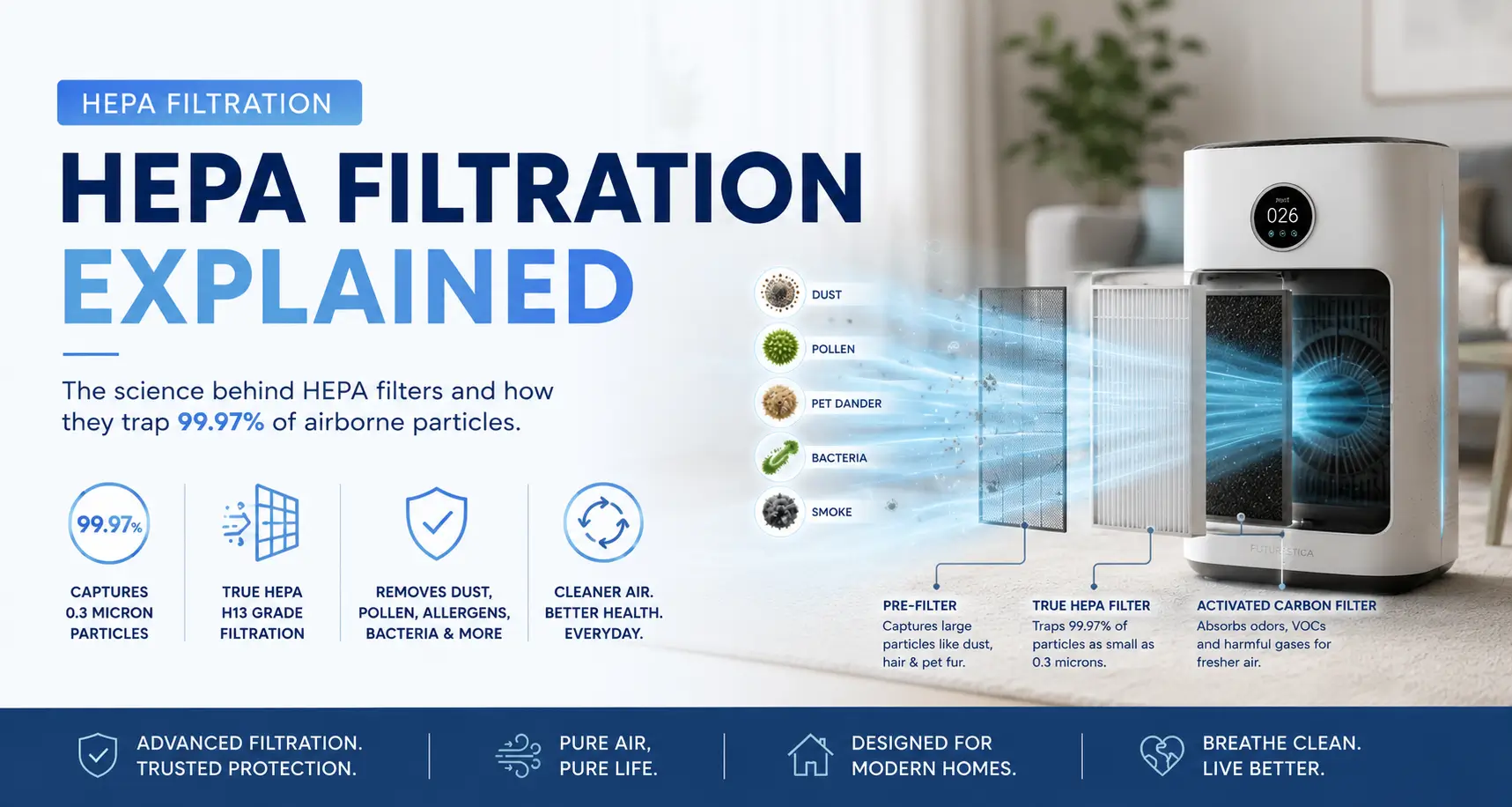
“True HEPA” is not a regulation. It’s a marketing claim. In India, where the Bureau of Indian Standards has not yet specified a HEPA grade requirement for consumer air purifiers, any brand can print “True HEPA” on a box without legal consequence. Some are telling the truth. Many are not.
If you’ve shopped for an air purifier recently, you’ve seen the labels: HEPA, True HEPA, HEPA-type, HEPA-class, HEPA-grade, H11, H12, H13, H14. They sound interchangeable. They are not. Two filters can both say “HEPA” on the box and differ by 14 percentage points in what they actually capture, which at Delhi-typical AQI 300 is the difference between protected air and barely-better-than-doing-nothing.
This guide decodes the entire HEPA grade system the way a particle physicist would explain it to a friend: clearly, without jargon, with the actual standards named. By the end, you’ll know what each grade captures, why “True HEPA” is a claim and not a certification, when H14 is overkill (it usually is), and how to physically verify a HEPA filter before you buy it.
If you want the broader buying decision rather than the technology, our complete air purifier buying guide for India walks through CADR, noise, and cost. This article is purely about the filter.
HEPA stands for High-Efficiency Particulate Air filter. The original definition came from the US Department of Energy after the Second World War, when researchers needed a filter that could capture radioactive aerosols from nuclear weapons facilities. The standard they settled on was 99.97% capture of particles at 0.3 microns. That number has barely moved since.
Today, three overlapping standards govern what can legally be called HEPA:
There is no Indian equivalent. The Bureau of Indian Standards published IS 17601 in 2021 as a general air purifier standard, but it does not require a specific HEPA grade to be disclosed. That’s the loophole that lets brands sell “HEPA-type” filters without ever printing an H-grade.
This matters because the H-grade is the only thing the standards actually certify. “True HEPA” is a phrase. H13 is a measurement.
The EN 1822 / ISO 29463 grade system measures filtration efficiency at the MPPS (Most Penetrating Particle Size), which we explain in the next section. Here’s what each grade means in plain terms.
| Grade | Capture at MPPS | Typical Use | India Relevance |
|---|---|---|---|
| H11 | 95% | Light commercial, basic consumer | Inadequate for PM2.5 at AQI 200+ |
| H12 | 99.5% | Mid-tier consumer purifiers | Adequate for normal-AQI homes |
| H13 | 99.95% | Premium consumer, hospital wards | The right ceiling for Indian homes |
| H14 | 99.995% | Hospital ICU, cleanroom, lab | Overkill for residential use |
H11 captures 95% of particles at the most penetrating size. That sounds high until you realise it means 5% of fine particles pass straight through the media. At AQI 300, where outdoor PM2.5 typically runs around 200 μg/m³, an H11 filter passes roughly 10 μg/m³ through on each cycle. That sits just under the WHO 24-hour guideline of 15 μg/m³, but only when the filter is new and only if the room is perfectly air-tight, neither of which is true in a real Indian flat.
H11 is acceptable for general dust and pet hair in low-pollution environments. For Indian winters in any northern metro, it is not enough.
H12 captures 99.5%. That’s a tenfold improvement over H11 in particles allowed through (0.5% vs 5%). In a moderate-AQI home (outdoor AQI 100, typical for many Indian cities outside peak smog season), H12 is reasonable. In a Delhi flat during November, it is still a compromise.
Most consumer “HEPA” filters sold without an explicit grade fall somewhere in the H11–H12 range. Brands don’t print “H11” on the box because it sounds underwhelming. They print “HEPA” and let the buyer assume the better.
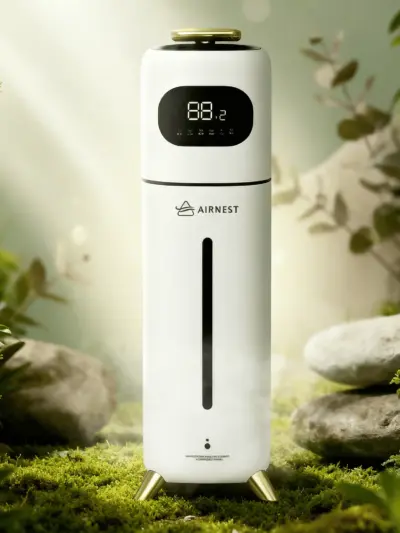
H13 captures 99.95%. This is the grade Airnest uses on both the Core and the Aura, and the grade we recommend any Indian buyer demand as a minimum. At the same 200 μg/m³ outdoor input, an H13 filter passes roughly 0.1 μg/m³ through, which is a hundred times less than H11. That’s the difference between an indoor PM2.5 reading you’d be comfortable showing a doctor and one you wouldn’t.
H13 also represents a meaningful technical step. To capture 99.95% at the most-penetrating size, the filter media must be denser and more precisely manufactured. Brands that ship H13 typically test and certify each batch. Brands that don’t ship H13 typically don’t.
H14 captures 99.995%. That’s a 10x improvement on the escape rate over H13 (0.005% vs 0.05%), but the absolute difference inside your home is undetectable by any consumer instrument. At 200 μg/m³ outdoor PM2.5, H13 passes roughly 0.1 μg/m³ through the media. H14 passes 0.01 μg/m³. Both are well below the WHO 15 μg/m³ safe threshold. You will not feel, see, or measurably benefit from the upgrade in a residential setting.
What you will notice is the trade-off. H14 has higher airflow resistance, which means a larger motor, more electricity, more noise at the same CADR. H14 belongs in hospital ICUs, semiconductor cleanrooms, and pharmaceutical labs where the cost of a single particle reaching the wrong place is enormous. In a 200 sq. ft. bedroom in Mumbai, you are paying for a guarantee you cannot use.
The honest answer: brands that push H14 to home buyers are exploiting the “more is better” instinct. H13 is the right consumer ceiling.
Every HEPA grade you’ve just read is measured at the Most Penetrating Particle Size, abbreviated MPPS. The MPPS for fibrous filter media sits at approximately 0.3 microns. Here’s why that’s the test particle, and why it matters more than the label on the box.
Filter media doesn’t catch all particles equally. Larger particles (above 1 micron) hit fibres directly and stick. Smaller particles (below 0.1 micron) move erratically through Brownian motion and get trapped almost incidentally. The hardest particles to catch are the in-between ones, around 0.3 microns, which travel in straight lines, slip past fibres, and resist the random motion that catches the tiny ones.
That’s why standards bodies chose 0.3 microns as the test particle. A HEPA filter rated at H13 captures 99.95% of the hardest particles it will ever face. Everything bigger and everything smaller is caught at higher efficiency. The grade is a worst-case guarantee, not a best-case marketing number.
What this means in practice: if you see a filter advertised as “99% effective at 1 micron,” that’s not the same as H13. A 1-micron particle is easy. The 0.3-micron particle is the standard the whole industry was built around. Always look for the capture rating at 0.3 microns or smaller.
This is where most Indian buyers get lost. The label looks technical. Most of the labels aren’t.
| Label on Box | What It Promises | What It Actually Is | Trust? |
|---|---|---|---|
| True HEPA (H13) | 99.95% at 0.3μm | If accompanied by an H-grade, it’s real | ✅ With the grade |
| HEPA-Type | Sounds like HEPA | Unregulated; typically 60–90% capture | ❌ |
| HEPA-Class | “Class” sounds technical | Unregulated marketing | ❌ |
| HEPA-Grade | “Grade” sounds technical | Unregulated marketing | ❌ |
| 99% HEPA | High capture rate | At what particle size? Often only 1μm+ | ❌ Without size |
| HEPA-Like | Resembles HEPA | Honestly admitting it isn’t HEPA | ❌ |
The pattern is consistent: any qualifier added to “HEPA” usually means the manufacturer is signalling they cannot legally claim the underlying standard. “True HEPA” plus an H-grade is the only combination that maps cleanly to a regulated specification. Everything else is language designed to feel similar.
Consider a typical scenario in any Indian electronics aisle. A buyer comparing two ₹6,000 purifiers reads “True HEPA” on one box and “HEPA-Type” on the other. They assume the difference is a marketing flourish. It isn’t. The “HEPA-Type” filter may be capturing 75% of fine particles. The “True HEPA” filter, if it lists H13, is capturing 99.95%. At AQI 300 over a winter, the two filters produce dramatically different indoor air. The buyer made a ₹0 budget decision and a 99.20-percentage-point health decision in the same moment.
If you want a complete pre-purchase framework that catches mistakes like this, our air purifier buying guide for India walks through the verification steps. The short version is below.
A label is a claim. A grade is a measurement. Use this five-step check:
Brands that ship genuine H13 publish their test data. Brands that don’t, hide behind “HEPA technology” language. The distinction is usually visible before you reach checkout.
Behind every H-grade is a specific test procedure. The two methods you’ll see referenced most often:
DOP / DEHS aerosol challenge: a precise aerosol of di-ethyl-hexyl-sebacate (DEHS) particles, sized at the MPPS, is generated upstream of the filter. A laser particle counter or photometer measures concentration downstream. Capture efficiency is calculated from the ratio.
Standards alignment: EN 1822 and ISO 29463 both require local leak-testing of every filter, not just batch sampling. That means each individual H13-or-higher filter has been scanned for pinhole leaks before it ships. ASHRAE 52.2, by contrast, only specifies MERV ratings (a coarser scale that does not technically certify HEPA). A “MERV 17” claim is not the same as H13.
If you’ve ever wondered why H13 filters cost more than HEPA-type filters: that scan-test per unit is a meaningful chunk of the price. You’re paying for the certificate as much as the media.
For a deeper mechanical explanation, our how HEPA filters actually work guide explains diffusion, interception, and inertial impaction in plain English. For now, what matters is: the H-grade isn’t a marketing tier, it’s the outcome of a measurable test.
This is the section every honest HEPA explainer needs and most skip.
HEPA captures particles. It does nothing for gas-phase pollutants, formaldehyde from new furniture, VOCs from paint, ozone, carbon monoxide, or cooking-oil aerosols smaller than 0.1 microns. For those, you need an activated carbon layer alongside the HEPA. Every Airnest purifier includes one. Many cheap “HEPA-only” purifiers do not.
Same answer as VOCs. The smell of a tadka, a wet bathroom, or a new sofa is gas-phase chemistry. HEPA fibres don’t bind to it. Carbon does.
Mostly captured (by Brownian motion catching them on fibres), but the capture rate at 0.05 microns is harder to certify and rarely reported. If ultra-fine PM is a specific concern, look for purifiers that publish their full efficiency curve, not just the MPPS rating.
A purifier is not a vacuum. Particles already on surfaces stay there until you clean. HEPA filters airborne particles only.
This isn’t a knock on HEPA. It’s a reminder that good indoor air is a layered problem: filtration plus ventilation plus source control plus occasional cleaning. A single technology does one thing well. Knowing what it doesn’t do prevents disappointment.
If you’ve read this far, the practical conclusion is short. For an Indian residential setting:
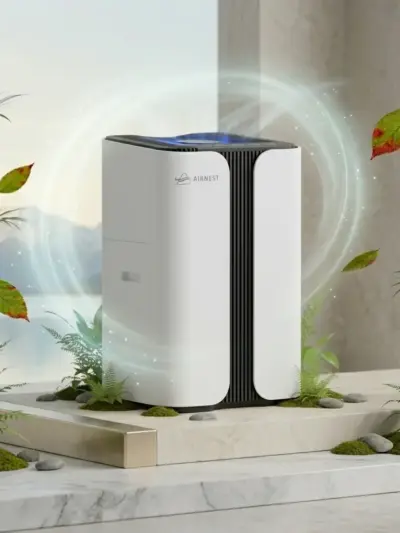
This is why both the Air Nest Core and the Air Nest Aura use H13 True HEPA combined with a pre-filter and an activated carbon layer at ₹4,999. The grade is the consumer ceiling. The three-stage architecture is what handles India’s actual indoor air, not just the textbook version.
For broader context on what’s actually in your indoor air, see our indoor air pollution guide for India. For specific model picks once you know what grade to demand, the best air purifier in India 2026 round-up is the next read.
Not exactly. “True HEPA” is a marketing term in most markets, with no single legal definition. In US documentation, it typically maps to 99.97% at 0.3 microns (equivalent to roughly between H13 and H14 on the EN 1822 scale). H13 is a specific certified grade. If a product advertises “True HEPA” without listing an H-number, the claim is unverifiable.
Yes. H13 captures 99.95% of particles at 0.3 microns, which includes the entire PM2.5 size range (particles smaller than 2.5 microns). At Delhi-typical winter AQI 300, an H13 filter brings indoor PM2.5 well below the WHO 24-hour safe limit of 15 μg/m³ when paired with adequate CADR. For the full breakdown, see our explainer on whether HEPA filters actually remove PM2.5.
Technically yes, practically no for home use. H14 captures 99.995% vs H13’s 99.95%. The absolute difference at residential pollution levels is undetectable by any consumer instrument and below the WHO threshold either way. H14 also requires higher motor power and is noisier at the same CADR. H14 belongs in hospitals and cleanrooms, not bedrooms.
“True HEPA” is industry shorthand suggesting a filter meets the original US DOE specification (99.97% at 0.3 microns). It is not a regulated term. To verify a “True HEPA” claim, look for an accompanying H-grade (H13 or H14) and a reference to the EN 1822 or ISO 29463 standard.
Not a scam in the legal sense, but it is intentionally misleading. “HEPA-type” filters can capture as little as 60% of particles at 0.3 microns while sounding nearly identical to True HEPA on the box. The qualifier is the manufacturer’s way of signalling that the filter does not meet HEPA’s underlying performance threshold. Avoid.
In typical Indian conditions, H13 HEPA filters last 6 to 12 months depending on pollution levels and runtime. Heavy use during smog season (October through February in north India) can shorten that to 5–7 months. For a deeper breakdown, see our HEPA filter replacement guide for India.
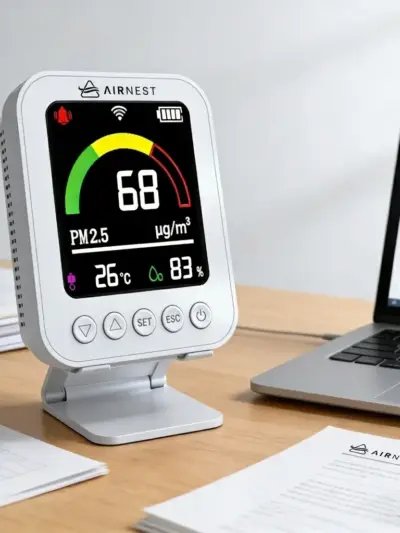
Three checks. First, the H-grade should be printed on the physical filter, not just the outer box. Second, the brand should be able to produce an EN 1822 or ISO 29463 test certificate on request. Third, after running the purifier in a room with a separate PM2.5 monitor, you should see indoor PM2.5 drop within an hour to single-digit μg/m³. If none of those check out, the filter is not what the label claims.
The HEPA classification system isn’t complicated once you separate the regulated terms from the marketing language:
When you next compare air purifiers, look past the badge on the box. Find the H-grade. Read the standard it cites. Ask for the certificate. The brands that earned the grade will tell you. The brands that didn’t will hope you don’t ask.
If you’d like to apply this knowledge to a specific buying decision, our complete HEPA air purifier guide for India covers model selection, lifespan, and replacement cost.
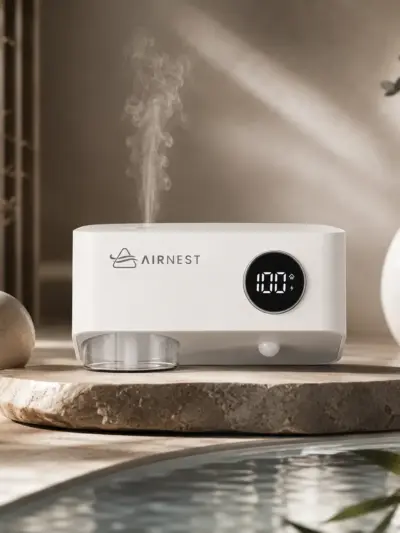
Both the Air Nest Core and the Air Nest Aura desktop purifier ship with H13 True HEPA at ₹4,999, because H13 is the grade that makes sense for the air Indian families actually breathe.
Clean air shouldn’t depend on decoding marketing copy. Once you know what H13 means, it doesn’t.
Pre-Order
Pre-Order