
Your cart is currently empty!.
You may check out all the available products and buy some in the shop.
Continue Shopping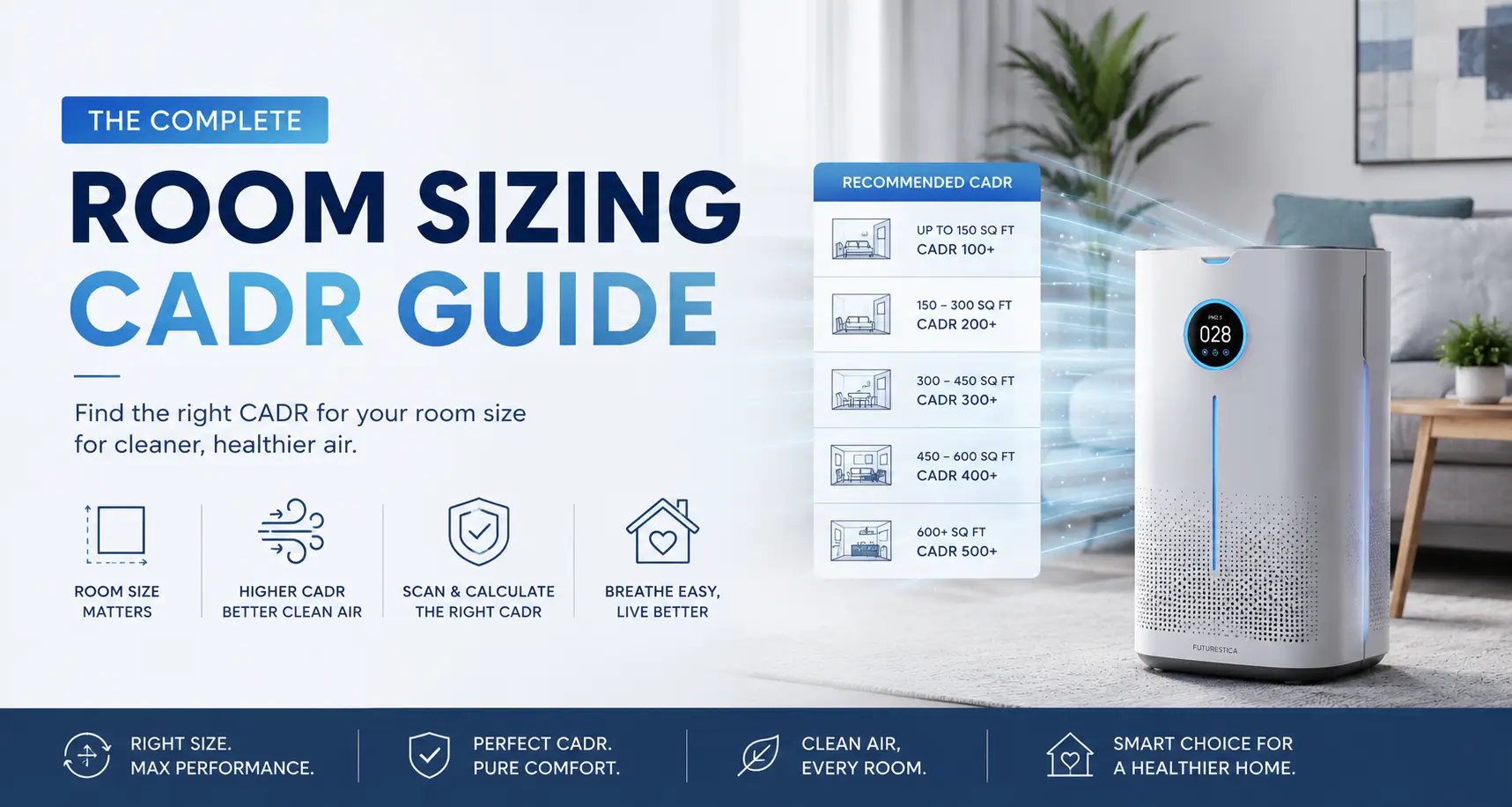
Most CADR calculators online assume your bedroom is 400 sq. ft. Indian bedrooms are usually 120–250 sq. ft. That one mismatch is why most Indian buyers either overspend on an oversized purifier or undersize and wonder why their air still feels heavy in November.
This guide fixes that. It explains what CADR actually is, how to calculate the number your room needs at India’s typical 10 ft ceiling height, and how to recognise when a brand’s “covers 500 sq. ft.” claim is marketing math rather than health math. By the end, you’ll have a formula you can apply to any purifier on Amazon, Flipkart, or a brand site, and you’ll know exactly what to buy for your specific room.
If you want the full buying decision rather than just sizing, our complete air purifier buying guide for India walks through HEPA grade, noise, and five-year cost. This article is purely about CADR and room sizing.
CADR (Clean Air Delivery Rate) measures the volume of filtered air an air purifier delivers per hour, expressed in m³/h (cubic metres per hour). It’s the only performance number on a spec sheet that you can compare directly across brands, because it’s measured the same way by every credible manufacturer. A higher CADR means the purifier cleans more air, faster.
The standard test is run by AHAM, the Association of Home Appliance Manufacturers. A purifier is placed in a sealed test chamber, calibrated quantities of three pollutants are released (smoke, dust, pollen), and the rate at which the purifier removes each is measured. The result is three CADR numbers, one per pollutant.
For Indian buyers, smoke CADR is the most relevant. Smoke particles are the smallest in the AHAM test (around 0.09–1.0 microns), which makes them the closest proxy for PM2.5, the dominant Indian indoor pollutant. If a brand publishes only one CADR number without specifying which, assume it’s the highest of the three (typically pollen). Ask for smoke CADR specifically.
ACH is the number of times per hour the entire volume of air in your room cycles through the purifier’s filter. CADR and ACH are linked by a simple equation:
ACH = CADR ÷ Room Volume
ASHRAE, the global ventilation standards body, recommends a minimum of 4–5 ACH for residential indoor air quality. That’s the baseline for normal AQI conditions. For Indian conditions, where seasonal smog and indoor pollution are baseline realities, we use 5 ACH as the starting point and 6 ACH for allergy households or smog season.
| ACH | Use Case | Recommended For |
|---|---|---|
| 3 ACH | Bare minimum, casual use | Low-AQI cities, no health concerns |
| 5 ACH | Residential standard | Normal Indian urban homes |
| 6 ACH | Health-protective | Allergies, asthma, smog season, near construction |
| 8 ACH+ | Medical / hospital | Not needed for residential use |
Indian apartments have one feature most CADR formulas online ignore: 10 ft ceilings. US calculators assume 8–9 ft. That extra two feet adds 25% more room volume, which means you need 25% more CADR for the same air change rate.
The corrected formula for India:
CADR (m³/h) = Room sq. ft. × 1.4 for 5 ACH at India’s typical 10 ft ceiling.
For allergy households or smog season, scale up:
CADR (m³/h) = Room sq. ft. × 1.7 for 6 ACH.
That’s the whole formula. Four steps to apply it:
A reference table you can use directly. All values are CADR in m³/h, calculated for India’s 10 ft ceiling.
| Room Type | Typical Size | Min CADR (5 ACH) | Allergy / Smog Season (6 ACH) |
|---|---|---|---|
| 1BHK child’s room | 100–140 sq. ft. | 140–195 | 170–240 |
| Nursery | 100–150 sq. ft. | 140–210 | 170–255 |
| 1BHK master bedroom | 120–160 sq. ft. | 170–225 | 205–275 |
| 2BHK master bedroom | 160–220 sq. ft. | 225–310 | 275–375 |
| Studio / 1RK | 180–220 sq. ft. | 250–310 | 305–375 |
| 1BHK living room | 220–320 sq. ft. | 310–450 | 375–545 |
| 2BHK living + dining | 320–500 sq. ft. | 450–700 | 545–850 |
A few practical notes before you read this as a checklist:
Math: 180 × 1.4 = 252 m³/h CADR (5 ACH minimum).
For an asthmatic family member or smog season ramp-up: 180 × 1.7 = 306 m³/h (6 ACH).
This puts you in the range where the Air Nest Core fits well. It delivers 5 ACH in a 219 sq. ft. bedroom, enough headroom for a 180 sq. ft. room at 6 ACH during November smog.
Math: 320 × 1.4 = 448 m³/h CADR (5 ACH minimum).
But there’s a catch, this is a cooking-adjacent space, so you should size to 6 ACH: 320 × 1.7 = 544 m³/h.
This is a higher-CADR purifier requirement than most ₹4,999–₹10,000 single units deliver. The honest answer here: either accept that one purifier in the living room delivers ~3 ACH (acceptable but not ideal), or invest in a higher-CADR unit, or run a smaller purifier in the bedroom and accept that the living room will have higher baseline PM2.5 outside cooking hours.
Math: 130 × 1.7 = 221 m³/h CADR (6 ACH for allergies).
Filter grade matters as much as CADR here. Pair this with H13 True HEPA filtration rather than “HEPA-type”, the difference at AQI 300 is roughly 100x in fine particles passing through.
This is the most expensive mistake in the category. A 500 m³/h purifier in a 150 sq. ft. bedroom is loud on every setting except sleep mode, costs double in filter replacements, and produces no measurable air-quality benefit over a properly sized 220 m³/h unit. Match, don’t max.
Some brands sell a single high-CADR unit as a “whole-home purifier.” Physics doesn’t agree. Air doesn’t migrate through closed doors. A purifier in your living room does nothing for the bedroom you’re sleeping in. Two rooms means two purifiers, not one big one.
A brand can claim “covers 500 sq. ft.” with a 200 m³/h CADR by quietly assuming 2 ACH. That’s a marketing maths trick, it sounds impressive but it’s not the same as effective filtration. Always work backwards: Coverage at 5 ACH = CADR ÷ 1.4. So a 200 m³/h CADR truly covers around 140 sq. ft. at the residential standard.
Most online CADR calculators are built for US 8 ft or European 9 ft ceilings. The Indian National Building Code typical ceiling height is 3 m (about 10 ft). Plug your room into a Western calculator and you’ll under-buy by 20–25%. The 1.4 multiplier in this article corrects for that.
The 1.4 multiplier (5 ACH) is the standard. The 1.7 multiplier (6 ACH) applies if any of these describe your home:
For any of these, size up. The cost difference between a 200 m³/h and 280 m³/h purifier is usually under ₹2,000. The health protection difference is meaningful.
For broader context on what’s actually in your air, our indoor air pollution guide for India walks through the specific pollutants and where they come from.
CADR is the starting number, not the only number. Once you’ve matched CADR to your room, the next three specs decide whether the purifier is worth buying.
You need all four. A purifier with perfect CADR and “HEPA-type” filtration cleans less air per cycle. A purifier with H13 HEPA but no noise discipline gets switched off after the third night. Match all four; don’t optimise for CADR alone.
If you’re early in your buying research, our 5-step air purifier buying framework sequences these four specs into a single decision flow.
Two products, two different jobs.
Air Nest Core full-bedroom purifier at ₹4,999. Delivers 5 ACH in a 219 sq. ft. room (the AHAM residential standard for India’s 10 ft ceiling). Right for master bedrooms in 1BHK and 2BHK flats up to ~220 sq. ft., or smaller rooms at the 6 ACH allergy-protective rate.
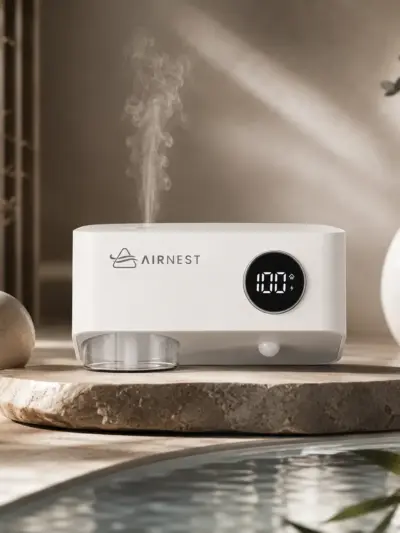
Air Nest Aura, Personal-space purifier at ₹4,999. 100 m³/h CADR. This isn’t a full-room replacement for the Core. It creates a clean-air zone around your desk, nightstand, or workstation, roughly 70 sq. ft. at 5 ACH. Designed for the person, not the room.
The simple decision rule: Core if you want to clean the whole bedroom. Aura if you want clean air around your specific seat. If you need both jobs done, a clean bedroom plus a clean desk in your home office, buy both. They aren’t substitutes for each other.
If you’re at the ₹5,000 price ceiling, our best air purifiers under ₹5,000 in India breakdown compares the picks worth considering.
For a typical Indian bedroom of 150–200 sq. ft. with a 10 ft ceiling, you need a CADR of approximately 210–280 m³/h for the residential 5 ACH standard. For allergy households or smog season, size up to 255–340 m³/h (6 ACH).
Multiply your room’s square footage by 1.4 for the minimum 5 ACH CADR at India’s typical 10 ft ceiling. Multiply by 1.7 if anyone has allergies or you’re in a high-pollution area (6 ACH). A 200 sq. ft. bedroom needs 280 m³/h minimum, or 340 m³/h for an allergy household.
No. A purifier with a CADR much higher than your room needs will be loud on every setting except sleep mode, cost more in filter replacements, and produce no measurable air-quality benefit. Match CADR to your room with modest headroom (10–20%), don’t maximise.
About 280 m³/h for the residential 5 ACH standard. For an allergy household or during Delhi smog season, 340 m³/h (6 ACH). These figures assume India’s typical 10 ft ceiling height.
CADR is a measured value. Coverage area is a brand claim, calculated by the manufacturer using whatever ACH assumption flatters their product. A 200 m³/h purifier can be marketed as “covering 500 sq. ft.” at 2 ACH (essentially useless) or “covering 140 sq. ft.” at 5 ACH (medically appropriate). Always work backwards from CADR; treat coverage claims with scepticism.
AHAM (Association of Home Appliance Manufacturers) is the US body that publishes the standard test for CADR. Purifiers certified to AHAM Verifide standards have been tested in a sealed chamber against three pollutants (smoke, dust, pollen). Indian buyers should look for AHAM-certified CADR numbers as the gold standard for cross-brand comparison.
Sort of. Winter smog (October–February in north India) is the high-CADR demand season, size to 6 ACH. Monsoon brings humidity and mould rather than PM2.5, so the same CADR is fine but a humidifier or dehumidifier may matter more than a higher-CADR purifier.
No. Air doesn’t migrate through closed doors. A purifier cleans the room it’s in. If you have two bedrooms you want clean, you need two purifiers. If your flat is open-plan (studio or 1RK), one larger-CADR unit can cover the open volume.
CADR is the absolute volume of clean air per hour (m³/h). ACH is how many times per hour that volume cycles through your room’s air. They’re linked: ACH = CADR ÷ Room Volume. CADR is the spec; ACH is the outcome.
CADR isn’t complicated once you separate the formula from the marketing language.
Match, don’t max. The right CADR is the one that delivers 5–6 air changes per hour in the specific room you’re buying for. Anything more is noise and filter cost. Anything less is paying for clean air you aren’t getting.
If you’re ready to compare specific models, our best air purifier in India 2026 guide covers the top picks across price brackets. If you need a bedroom-specific recommendation, our best air purifier for the bedroom in India round-up is the next read.
Clean air starts with the right CADR. Now you know how to calculate it.
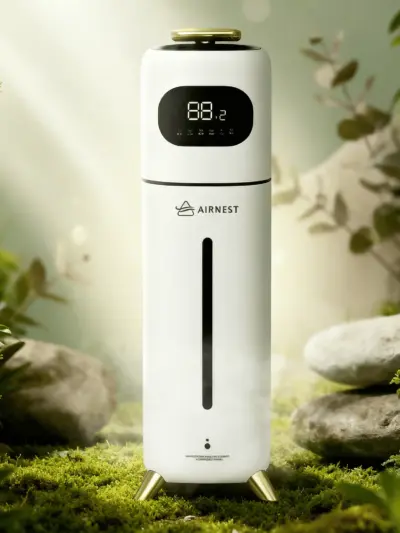
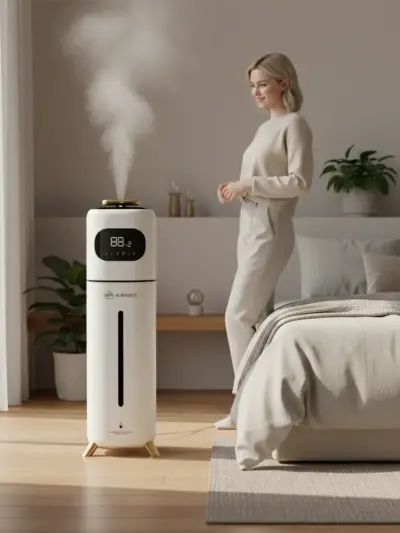
Pre-Order
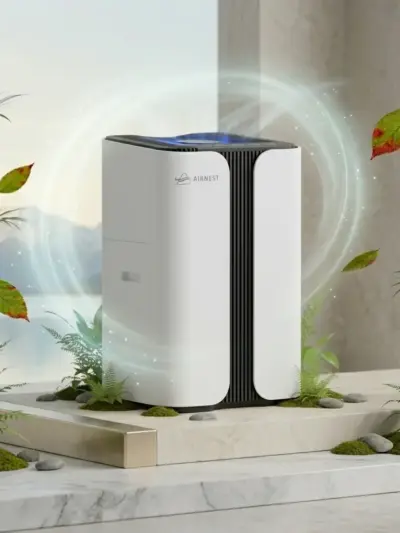

Pre-Order